

The Art of Hibachi: History, Flavor, and Theater on a Hot Grill

The Art of Hibachi: History, Flavor, and Theater on a Hot Grill
Introduction
Step into a modern hibachi restaurant, and your senses instantly come alive. You will hear the rhythmic clank of metal spatulas hitting a hot grill. You will smell the rich aroma of garlic butter and soy sauce. Suddenly, a burst of fire shoots toward the ceiling, followed by a room full of cheers and laughter.
Today, the word “hibachi” represents more than just a style of cooking. It stands for a unique dining experience that blends high-quality comfort food with live theater. While it has evolved significantly from its ancient Japanese roots, it remains one of the most popular and festive ways for families and friends to share a meal together.
The True Origin: From Heating Bowls to Flat Griddles
To truly understand hibachi, it helps to look at its history. The word hibachi translates literally to “fire bowl” in Japanese. Centuries ago, a traditional hibachi was a round, open-topped container made of wood or ceramics. People lined the inside with clay and filled it with burning charcoal.
Surprisingly, these original devices were not built for heavy cooking. Instead, people used them as portable space heaters to warm up small rooms during the winter. Occasionally, they might use the gentle heat to warm a pot of tea or toast a rice cake.
What most people call “hibachi” today is actually a style known as teppanyaki. The word teppan means iron plate, and yaki means grilled. This method uses a large, flat, solid steel surface heated by gas. It allows chefs to cook massive amounts of meat, rice, and vegetables all at the same time. When Japanese steakhouses first opened in the United States in the mid-1900s, owners used the word “hibachi” because it was easier for English speakers to pronounce and remember. Over time, the name stuck.
Dinner and a Show: The Hibachi Experience
The main reason people flock to these restaurants is the entertainment. Instead of cooking away in a hidden kitchen, the chef prepares the entire meal directly in front of the guests. The large iron grill sits in the middle of a massive table, and guests sit around the edges.
The chefs are highly trained entertainers who turn cooking tools into props. A typical meal features several famous tricks:
- The Onion Volcano: The chef stacks rings of white onion into a cone shape. They pour flammable alcohol down the center and ignite it. Fire shoots out of the top like a real volcano, and the chef often mimics a train whistle as steam pours out.
- Egg Flipping: Chefs play with raw eggs by bouncing them off the flat edge of their metal spatulas. They might catch the egg perfectly in their apron pocket, or flip it high into the air before cracking it directly onto the grill with one hand.
- The Food Toss: To get the audience involved, chefs will chop up small pieces of zucchini or shrimp. They will then toss the food across the table, challenging guests to catch the flying treats directly in their mouths.
What is on the Plate?
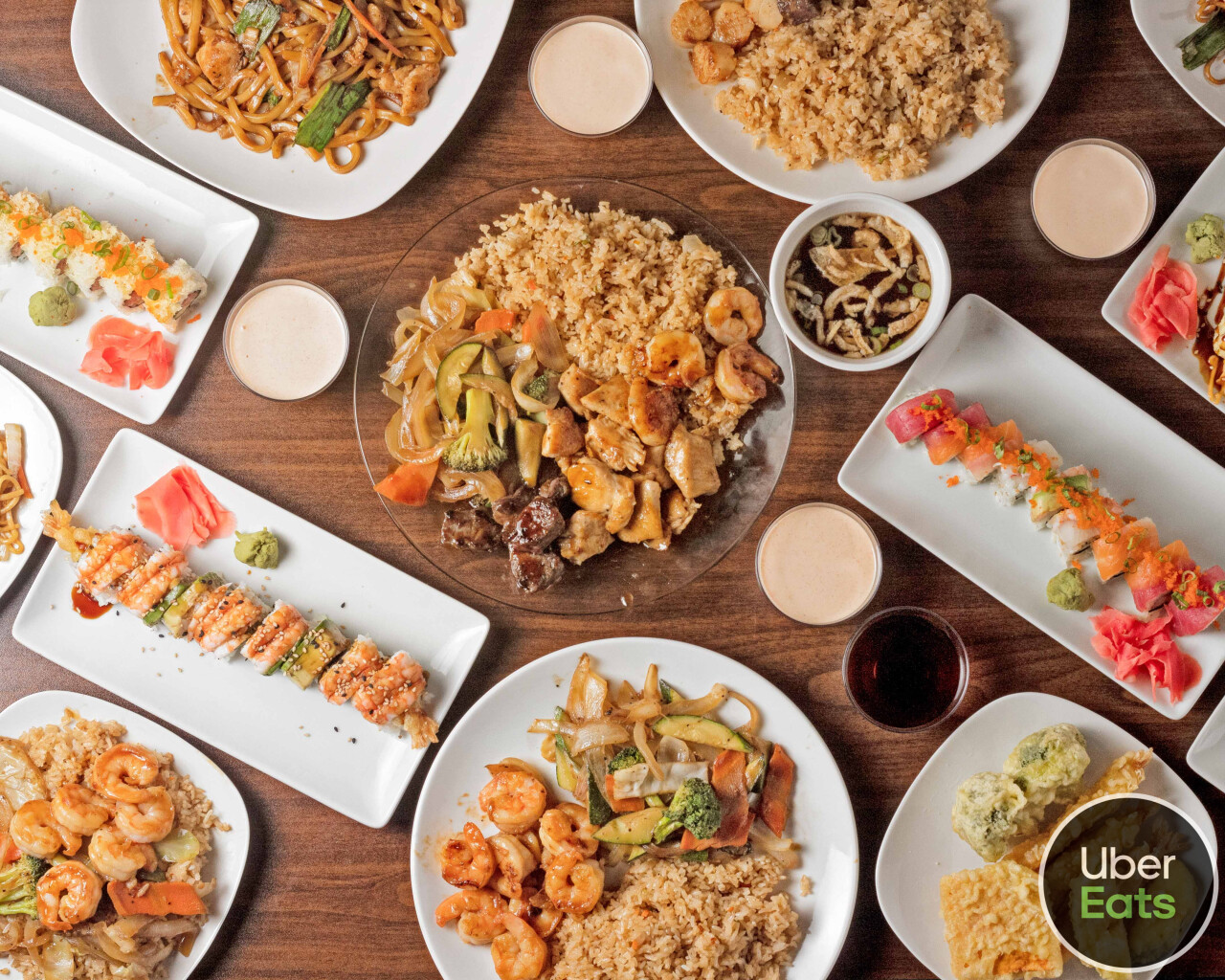
The food itself is simple, hearty, and packed with savory flavor. Chefs rely on a few key ingredients to season almost every dish: soy sauce, garlic, sesame oil, and large amounts of butter. A standard hibachi dinner usually includes several components served in a specific order:
- The Appetizers: Meals usually start with a clear onion broth soup and a crisp house salad topped with a tangy, bright orange ginger dressing.
- Fried Rice: The chef prepares the rice right on the grill. They mix white rice with eggs, peas, carrots, soy sauce, and butter, flipping it high into the air to keep it fluffy.
- The Vegetables: A mix of sliced zucchini and sweet white onions are seared until they are tender and slightly charred.
- The Main Protein: Guests can choose from bite-sized pieces of chicken, steak, shrimp, scallops, or lobster tails. The high heat of the iron grill locks in the juices, keeping the meat incredibly tender.
- Yum Yum Sauce: No hibachi meal is complete without this famous dipping sauce. It is a sweet, creamy, mayo-based pink sauce that guests love to pour over their rice and dip their meats into.
Conclusion
Hibachi successfully bridges the gap between dining and entertainment. It takes fresh, simple ingredients and transforms them into a celebratory oishii sushi feast through the power of high-heat cooking and human connection. Whether you are celebrating a big birthday or just looking for a fun night out with family, a seat around the iron grill guarantees great food and unforgettable memories.